


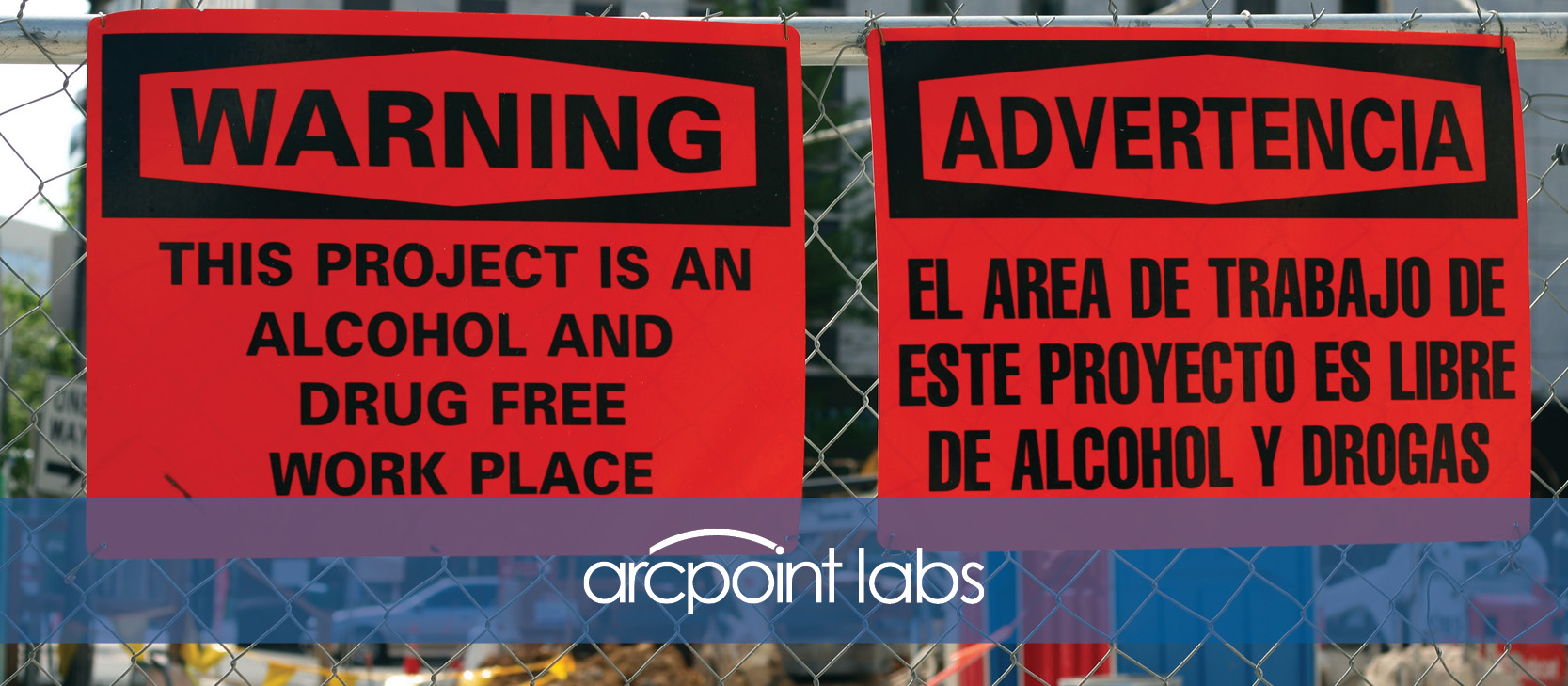
Eight Common Reasons Drug-Free Workplace Policies Fail
A drug-free workplace policy is supposed to do two things at once: deter substance use in the workforce and give the employer a defensible framework when something goes wrong. Most policies handle the first job on paper. Where they break is in enforcement, and the breakdowns tend to look the same across industries. Supervisors don’t know what to do in the moment. Documentation gaps make a positive test legally fragile. Outdated language fails the first real test from changing state laws.
Below are eight of the most common reasons drug-free workplace policies fall short of what they were written to do, and what each gap actually looks like in practice. Strong drug and alcohol testing for employers starts with a policy that holds up under both day-to-day enforcement and the rare moment when everything is on the line.
1. Supervisors Can’t Recognize Reasonable Suspicion in Real Time
Reasonable suspicion is the entry point for most workplace drug testing outside of pre-employment and random. The problem is that most supervisors have never been trained on what reasonable suspicion actually looks like. They know something is off, but they aren’t sure whether they’re seeing impairment, fatigue, a medical issue, or just a bad day. Without confidence in what they’re observing, supervisors hesitate, and the moment passes. Targeted signs and symptoms training gives supervisors a structured way to identify the physical, behavioral, and performance indicators that justify a reasonable suspicion test, and the confidence to act on them when they see them.
2. Observations Don’t Get Documented in the Moment
A reasonable suspicion test that ends up in court is only as defensible as the documentation behind it. Verbal observations don’t survive litigation. A supervisor who tells HR “he seemed off” two days after the event has nothing for an attorney to work with. Documentation needs to be contemporaneous, specific, and ideally witnessed by a second supervisor, and include what was observed, when, where, by whom, and how the employee responded. When the documentation isn’t there, the testing decision becomes harder to defend, and so does any consequence that follows.
3. Enforcement Is Inconsistent Across Supervisors or Locations
When one supervisor sends an employee for testing and another supervisor lets a similar situation slide, the policy is no longer a policy. It’s a series of individual judgment calls. Inconsistent enforcement creates two problems. The first is legal exposure: an employee who was tested can point to a similarly situated coworker who wasn’t, and a discrimination claim writes itself. The second is workforce credibility: employees notice the inconsistency faster than HR does, and the policy stops carrying weight. Coordinated HR employment solutions keep enforcement standards consistent across managers, departments, and locations so the policy reads the same to every employee.
4. The Policy Hasn’t Been Updated for Current State Laws
State cannabis laws have shifted what employers can test for, what they can act on, and what protections employees have. A policy written five or ten years ago likely doesn’t account for medical cannabis protections in states that recognize them, recreational cannabis laws that restrict pre-employment marijuana testing, or off-duty use protections that vary by jurisdiction. Multi-state employers face a layered problem: a single policy can’t comply with conflicting state rules, but multiple state-specific addenda need to coexist with federal DOT requirements. Reviewing the policy on a regular cadence with DOT policy development support keeps the language aligned with both federal requirements and the state laws that apply to each workforce.
5. There’s No Defined Consequence Ladder After a Positive Result
A policy that says “a positive test may result in disciplinary action up to and including termination” leaves every situation to be decided in the moment. The first employee gets a second chance. The second one gets fired. The third one sues, citing inconsistent treatment. A defined consequence ladder lays out what happens at each step: first violation, second violation, refusal, dilute specimen, adulterated specimen. It specifies whether termination is automatic or whether mandatory evaluation and a return-to-work agreement are options. Many employers integrate employee assistance programs into the consequence framework so a first positive triggers a structured path to evaluation and possible return rather than an immediate termination decision.
6. Random Selection No-Shows Quietly Go Unreconciled
Random testing programs run on the assumption that every selected employee actually tests. When selections go uncompleted and never get reconciled, the random pool starts to drift. For DOT-regulated workforces, the issue is compounded by federal testing rate requirements that don’t care whether a selection was “missed” or “refused.” An enforcement audit will look at whether each selection produced a documented result, and the policy needs to spell out what happens when one doesn’t. Without that language, every no-show becomes a one-off decision instead of a policy-driven outcome.
7. The Return-to-Duty Process Isn’t Built Into the Written Policy
DOT-regulated employers know that a positive drug or alcohol test triggers a Substance Abuse Professional evaluation, a return-to-duty test, and a follow-up testing program. The problem is that the written policy often doesn’t reference any of this. When a positive happens, HR ends up reconstructing the process in real time. Schedule the SAP referral, figure out the timeline, coordinate the return-to-duty collection, set up the follow-up testing cadence. Building DOT drug and alcohol testing procedures directly into the policy turns the return-to-duty sequence into a playbook the company has already agreed to follow.
8. Records Aren’t Kept in a Way That Survives Audit or Litigation
Chain-of-custody forms, supervisor observation reports, test results, SAP records, consent documents, training certifications. For DOT-regulated employers, federal regulations specify what has to be retained and for how long. For non-DOT employers, the standard is whatever will hold up if the policy is challenged. The common failure is that records are kept inconsistently, or kept on paper in a way that makes audit production a fire drill. DOT compliance services typically include record-keeping and audit-readiness frameworks so the documentation exists in the form auditors and attorneys expect to see it.
Building a Policy That Actually Holds Up
Most drug-free workplace policies don’t fail on the page. They fail in the gaps between the policy and the day-to-day actions it’s supposed to govern. Closing those gaps means training supervisors to recognize and document what they see, building consistency into enforcement across managers and locations, updating language as state laws shift, defining what happens after a positive, and keeping records in a form that will survive scrutiny. A well-written drug-free workplace policy is the starting point, but the work of enforcement is where the policy proves itself. To review your current policy, build training around it, or set up the testing infrastructure behind it, find your nearest ARCPoint Labs location and start the conversation.