


The Ins and Outs of Why You Are Bloated and Gassy
If you’ve ever wondered why you are bloated and gassy, you’re not alone. It’s a common concern that can cause discomfort and affect your daily life. Here’s a quick overview of the primary reasons:
- Food intolerances, like lactose and gluten sensitivity
- Digestive issues, such as constipation and irritable bowel syndrome (IBS)
- Hormonal fluctuations, especially around your menstrual cycle
- Stress, which can impact digestion and gas production
- Eating habits, such as overeating can exacerbate bloating and gas
- Medical conditions, including small intestine bacterial overgrowth (SIBO) and Celiac disease
Bloating and gas are uncomfortable symptoms that many people experience. Gas forms when enzymes and bacteria break down the food you eat. Sometimes, this process can go haywire, leading to excess gas and that dreaded bloated feeling.
Food intolerances are major culprits. If you have trouble digesting certain foods, such as dairy or gluten, you might end up feeling bloated and gassy. Other common triggers include high-FODMAP foods, caffeine, and sugary drinks.
Digestive issues like constipation and IBS can also cause your belly to feel swollen. With constipation, stool remains in the large intestine for a longer period, allowing bacteria to produce more gas. IBS, a chronic condition, often comes with bloating, gas, and abdominal pain.
Hormones can also disrupt your digestion. Hormonal changes during your menstrual cycle can cause water retention and gas. Stress is another significant factor and can either slow down or speed up your digestive process, making you feel more bloated.
Finally, specific medical conditions like SIBO and Celiac disease can cause severe bloating and gas. If these symptoms persist or worsen, it might be beneficial to consult with a healthcare provider for a diagnosis.
For a deeper dive, check out our detailed infographic below.
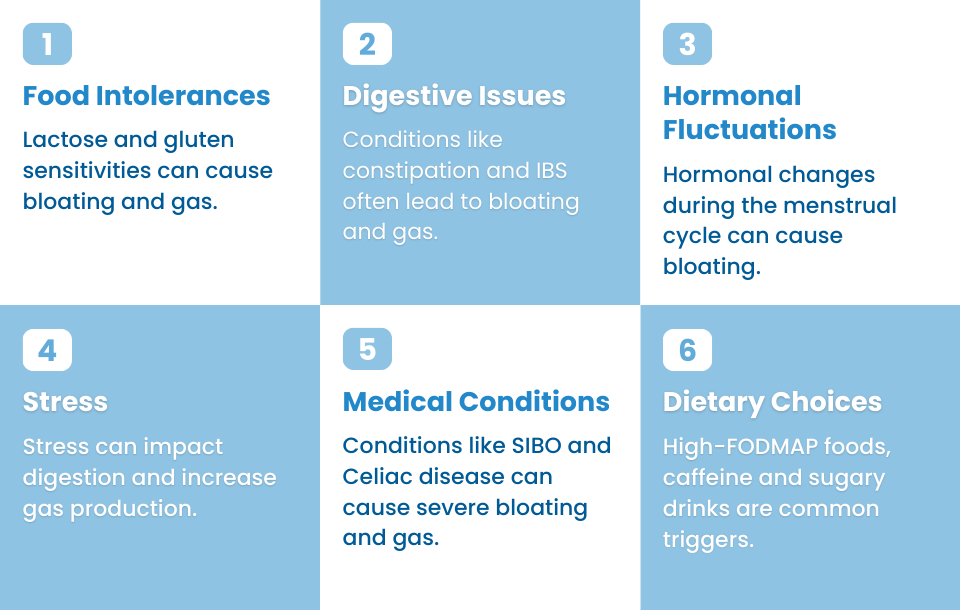
Common Causes of Bloating and Gas
If you’ve ever wondered, “Why am I bloated and gassy?”, you’re not alone. Bloating and gas are common issues that can stem from various causes. Let’s explore some of the main reasons.
Excess Gas
Gas is often a byproduct of normal digestion. However, when it becomes excessive, it can lead to bloating and discomfort.
Intestinal gas is produced when gut bacteria break down food in a process called fermentation. Foods high in fiber, like beans and whole grains, can increase gas production. Carbonated beverages like soda and beer also introduce extra air into your digestive system, leading to more gas.
Swallowing air when you eat or drink quickly, chew gum, or talk while eating can also contribute to excess gas.
Food Intolerances
Food intolerances occur when your body has trouble digesting certain foods. This can lead to gas and bloating.
Lactose intolerance is common and happens when your body is able to properly digest lactose, a sugar found in dairy products. Without sufficient amounts of lactase enzymes to break down lactose, gas and bloating can occur after consuming dairy.
Gluten sensitivity is another common intolerance. It can cause gas, bloating, and other digestive issues when you eat foods containing gluten, such as bread and pasta.
FODMAPs are a group of carbohydrates that many people find hard to digest. Foods high in FODMAPs include certain fruits, vegetables, and legumes. Other common culprits include foods with sulfites (like wine and beer) and histamines (found in aged cheeses and fermented foods).
Irritable Bowel Syndrome (IBS)
Irritable Bowel Syndrome (IBS) is a chronic condition that affects the large intestine. It can cause various digestive issues, including gas, bloating, constipation, and diarrhea.
People with IBS often experience gas pain and bloating due to abnormal gut motility and heightened sensitivity. Though the exact cause of IBS is unknown, it is linked to a combination of gut-brain interactions, gut bacteria imbalances, and food sensitivities.
Eating Habits
Your eating habits can significantly impact how much gas and bloating you experience.
For example, eating too fast can cause you to swallow a lot of air, leading to gas buildup. Chewing gum and talking while eating can also have the same effect. Drinking through a straw also introduces extra air into your digestive system.
Habits such as overeating or not chewing food properly can result in larger food particles entering the gut, where bacteria have to work harder to break them down, producing more gas as a result.
Medical Conditions
Certain medical conditions can also cause bloating and gas.
Ulcerative colitis and Crohn’s disease are inflammatory bowel diseases that damage the digestive tract, leading to gas and bloating.
Constipation can make it difficult to pass gas, causing it to build up and lead to bloating. Small intestinal bacterial overgrowth (SIBO) occurs when there is an overgrowth of bacteria in the small intestine, leading to excessive gas production.
If you’re experiencing persistent bloating and gas, it might be due to one of these underlying conditions. It’s important to consult a healthcare provider for a proper diagnosis and treatment plan.
Digestive Issues
Indigestion and constipation are frequent culprits. When food isn’t digested properly, it can cause gas buildup and bloating. Constipation slows down the movement of stool, giving bacteria more time to ferment food residues, producing gas.
Food intolerances play a significant role too. Lactose intolerance can cause bloating and gas after consuming dairy products. Similarly, gluten intolerance can lead to discomfort after eating wheat-based foods.
Your gut bacteria also matter. An imbalance in your gut microbiome can lead to excess gas. Conditions like Small Intestinal Bacterial Overgrowth (SIBO) can exacerbate this issue.
Hormonal Fluctuations
Hormones can significantly impact your digestive system. During the menstrual cycle, estrogen and progesterone levels fluctuate, which can lead to water retention and bloating.
Perimenopause and menopause can also lead to digestive changes. Lower estrogen levels can affect gut motility, increasing the likelihood of bloating and gas. According to Forbes, these hormonal changes can disrupt the gut microbiome, leading to digestive discomfort.
Stress
Stress has a direct impact on digestion. It can increase gas production and disrupt normal digestive processes. The fight or flight response releases stress hormones that can slow down digestion, leading to bloating and gas.
Lifestyle factors like poor diet, lack of exercise, and inadequate sleep can worsen stress-related digestive issues. High levels of chronic stress can even contribute to conditions like Irritable Bowel Syndrome (IBS), which is known for causing gas and bloating.
Over-the-Counter Drugs:
Many over-the-counter (OTC) medications, such as pain relievers, antacids, and even some supplements, can contribute to digestive issues, including gas and bloating. These medications can alter the natural flora of the gut or change the normal acidity levels in the stomach, disrupting digestion. For example, non-steroidal anti-inflammatory drugs (NSAIDs) like ibuprofen can irritate the stomach lining, leading to increased gas production or bloating. Antacids, while helpful in neutralizing stomach acid, can also cause imbalances in gut bacteria or lead to the production of gas as a side effect.

Next, we’ll discuss the symptoms to watch for and when it is important to seek medical attention.
Symptoms and When to Seek Medical Attention
Symptoms to Watch For
Bloating and gas can be more than just uncomfortable; they can be signs of something more serious. Here are some symptoms to keep an eye on:
- Abdominal Pain: Persistent or severe pain in the abdomen should be checked out.
- Nausea: Feeling nauseous or having the urge to vomit can indicate an underlying problem.
- Poor Appetite: A lack of hunger or feeling full quickly can be a warning sign.
- Persistent Bloating: Bloating that lasts more than two weeks should be evaluated.
- Tightness, Pressure, and Fullness: These sensations can be indicators of trapped gas or more serious conditions.
- Distended Abdomen: A visibly swollen belly, especially if it doesn’t go away, should be checked out.
- Discomfort: Any ongoing discomfort should be discussed with a healthcare provider.
When to See a Doctor
Sometimes, bloating and gas are more than just minor annoyances. You should definitely see a doctor if you experience the following:
- Persistent Symptoms: If your symptoms don’t resolve or keep recurring, it’s important to get checked out.
- Severe Pain: Extreme abdominal pain is a red flag.
- Fever: A fever along with bloating can indicate an infection.
- Vomiting: Throwing up, especially if it’s frequent, needs medical attention.
- Weight Loss: Unexplained weight loss can be a serious sign.
- Changes in Stool: If your stool looks different, or you’re experiencing constipation or diarrhea, see a doctor.
Don’t ignore these symptoms, as they could be signs of serious conditions like gastrointestinal diseases, infections, or even cancer. Early detection is key.
Next, we’ll explore how to relieve bloating and gas through diet and lifestyle changes.
How to Relieve Bloating and Gas
Dietary Adjustments
Eating slowly is one of the simplest ways to reduce bloating and gas. When you eat too fast, you swallow more air, which can lead to gas buildup in your stomach. Take your time, and savor each bite.
Smaller meals can also help. Large meals can stretch your stomach and make you feel overly full. By eating smaller portions more frequently, you can ease digestion and reduce bloating.
Avoid difficult-to-digest foods like greasy and fatty foods, and high-fiber foods such as beans and certain vegetables if they cause you trouble. Gradually introduce high-fiber foods to let your body adjust.
Cut back on carbonated drinks. Sodas and sparkling waters can introduce extra gas into your digestive system. Opt for still water or herbal teas instead.
Lifestyle Changes
Increase Physical Activity: Regular exercise helps move gas through your digestive tract more quickly. Even a short walk after meals can aid digestion and reduce bloating.
Sit Up Straight After Eating: Lying down can slow digestion and lead to bloating. Instead, stay upright for at least 30 minutes after a meal.
Take a Stroll After Meals: Walking stimulates your digestive system and can help move gas along more efficiently. Aim for a light 15-minute walk.
Over-the-Counter Remedies
Carminatives, such as peppermint oil and ginger, can help relieve gas and bloating. These natural remedies help relax the digestive tract and facilitate the passage of gas.
Digestive aids like simethicone (found in Gas-X and Mylicon) can break down gas bubbles in your stomach, making it easier to pass gas and feel more comfortable.
Herbal teas can also be beneficial. Chamomile, peppermint, and ginger teas are known for their soothing effects on the digestive system. These teas can help reduce gas and ease bloating.
By making these simple dietary and lifestyle adjustments, you can significantly reduce bloating and gas. However, if symptoms persist, consult with a healthcare professional for further evaluation.
Frequently Asked Questions about Bloating and Gas
Why am I so bloated and gassy all of a sudden?
A sudden onset of bloating and gas can be alarming. Several factors might be to blame:
- Diet Changes: Introducing new foods, especially those high in fiber, can increase gas production. Foods like beans, whole grains, and certain vegetables are common culprits.
- Stress: Stress can slow down digestion, leading to bloating and gas. The body’s “fight or flight” response releases hormones that affect your digestive system.
- Lack of Water: Dehydration can cause constipation, which traps gas and leads to bloating. Make sure you’re drinking enough water daily.
- Exercise: A lack of physical activity can slow down your digestive system, causing gas to build up.
- Over-the-Counter Drugs: Some medications, including pain relievers and antacids, can cause digestive issues. Always check the side effects of any new medication.
How do I stop being bloated and gassy?
If you’re wondering how to stop being bloated and gassy, try these tips:
- Eat Slowly: Eating too quickly can cause you to swallow air, leading to gas. Take your time and chew your food well.
- Chew Well: Properly chewing your food helps break it down, making it easier for your digestive system to process.
- Room Temperature Beverages: Cold drinks can slow down digestion. Opt for room temperature beverages to help your digestive system work more efficiently.
- Physical Activity: Regular exercise helps move gas through your digestive system. Even a short walk after meals can make a big difference.
When should I worry about bloating and gas?
While occasional bloating and gas are normal, persistent symptoms may indicate a more serious issue. Seek medical attention if:
- Persistent Bloating: If you experience bloating more than 12 times a month, it could be a sign of an underlying condition.
- Severe Pain: Intense abdominal pain should never be ignored.
- Fever or Vomiting: These symptoms, along with bloating, could signal an infection or other serious issues.
- Weight Loss: Unintended weight loss along with bloating can be a red flag.
- Changes in Stool: If you notice any significant changes in your stool, such as consistency or frequency, it’s important to see a doctor.
Understanding the causes of your bloating and gas can help you find relief. If dietary changes and over-the-counter remedies don’t work, consult a healthcare provider for a thorough evaluation.
Conclusion
Bloating and gas can be uncomfortable and frustrating. Understanding the causes can help you find relief.
Summary of Causes
Excess gas often results from swallowing air or the fermentation of certain foods by gut bacteria. Common culprits include carbonated beverages and high-fiber foods.
Food intolerances, like lactose intolerance and gluten sensitivity, can also cause gas and bloating. Specific foods containing sulfites, histamines, or FODMAPs may trigger symptoms.
Irritable Bowel Syndrome (IBS) is a chronic condition that leads to frequent gas and bloating. Eating habits, such as eating too quickly or drinking through a straw, can worsen the issue.
Medical conditions like ulcerative colitis, Crohn’s disease, constipation, and small intestine bacterial overgrowth (SIBO) can also contribute to these symptoms.
Relief Methods
- Dietary Adjustments: Eating slowly, having smaller meals, and avoiding difficult-to-digest foods can help.
- Lifestyle Changes: Increased physical activity, sitting up straight after meals, and taking a stroll can aid digestion.
- Over-the-Counter Remedies: Products like simethicone (found in Gas-X) and enzyme supplements like lactase can reduce symptoms. Herbal teas and carminatives are also helpful.
When to Seek Medical Attention
You should see a doctor if your bloating and gas are persistent or severe. Symptoms such as a fever, vomiting, unintended weight loss, and significant changes in stool consistency or frequency warrant medical attention.
ARCpoint Labs for Diagnostic Testing
If you’re struggling with persistent bloating and gas, ARCpoint Labs can help. Our state-of-the-art diagnostic testing services can identify the root cause of your symptoms, enabling you to take the right steps toward relief. No physician order is needed to book your tests with ARCpoint Labs.
Take control of your digestive health today. Schedule an appointment for specialized diagnostic testing with ARCpoint Labs.
Don’t let bloating and gas disrupt your daily life. Find the answers you need and start your journey toward a healthier digestive system.